Reliable pigging isn’t guesswork—it’s a thoroughly planned and engineered process with safety and a comprehensive clean in mind. From initial preparation to the final inspection, each step plays a crucial role in ensuring fully cleared piping systems that are ready for operation.
Here’s how B&W performs pigging services:
Step #1: Prepare
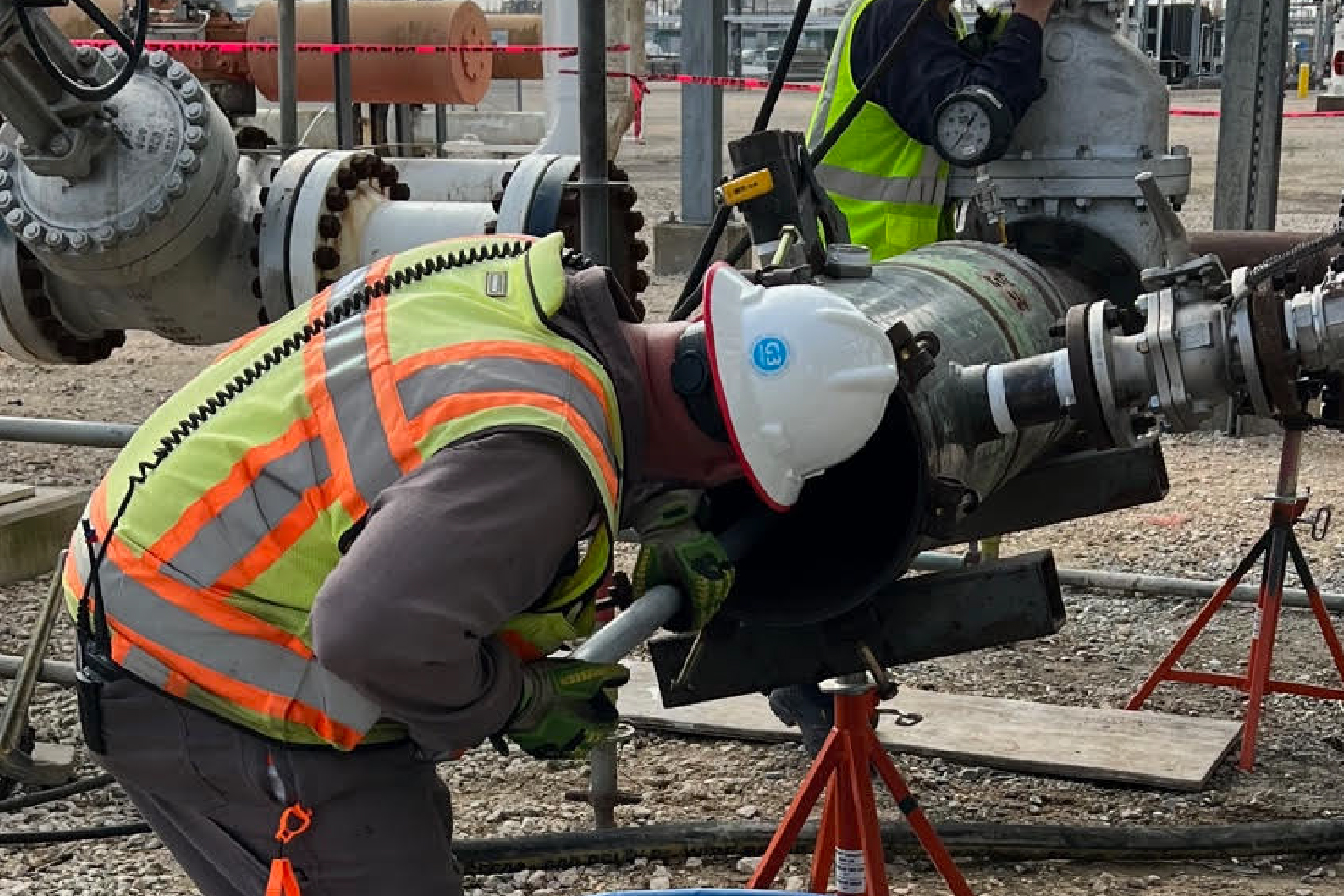
Before B&W starts pigging a line, our team ensures we come prepared with the correct tools, pigging equipment and personalized plan for your specific pigging project. We select the appropriate pigs that work well with your piping system’s design, operating conditions and the desired function, whether that’s pipe cleaning pigs, dewatering pigs or pigs that batches product.
Once our team is onsite, we conduct a full system inspection to verify trap seals, closures, signalers and more. We also ensure the correct pigging fluid and flow parameters are established for the run and confirm that each component is ready for a safe launch.
Step #2: Launch
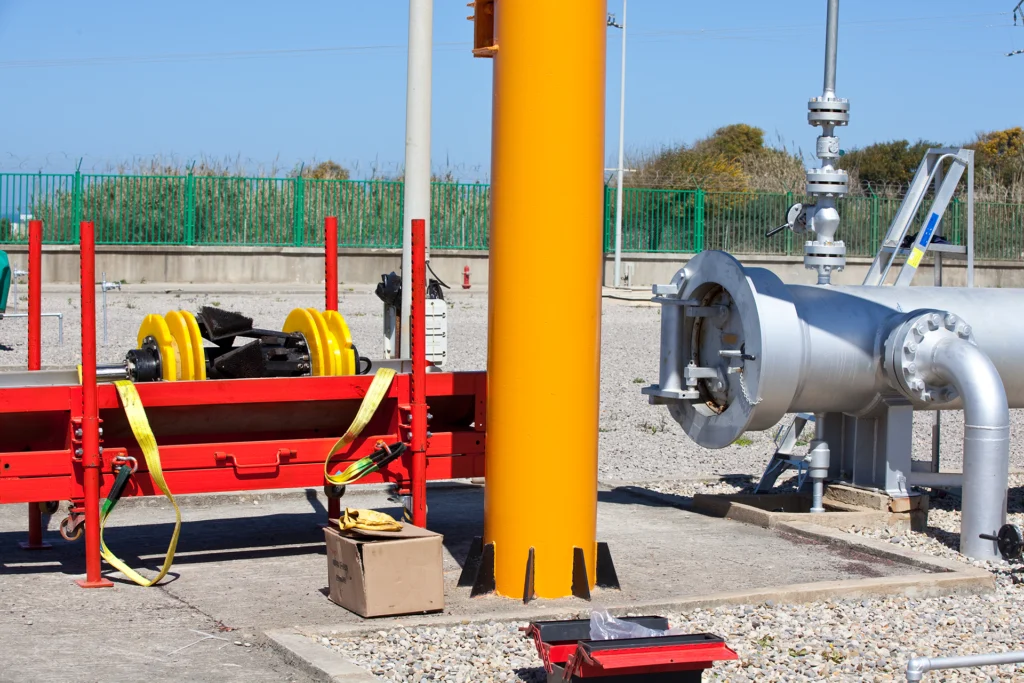
At B&W, we know that launching a pig is a delicate process, and our procedure is designed to protect both the piping system and the pigging equipment. Our team starts by depressurizing and isolating the pigging launcher before opening the trap. Once we place the pig inside the pigging launcher, we close the trap, vent air and equalize the pressure for a smooth transition into the piping system. After the pig is ready for launch, we open the kicker valve to send it into your pipeline.
Step #3: Monitor
Once the pig is in motion, the B&W team tracks its movements through signalers placed along your pipeline. Maintaining an appropriate velocity is key throughout the duration of a pig’s run, so our team adjusts system flow and pressure in real time to keep the pig on the right track.
If a pig happens to slow down or stop completely, our equipment allows us to pinpoint its exact location, and our team can address the issue quickly and precisely.
Step #4: Receive
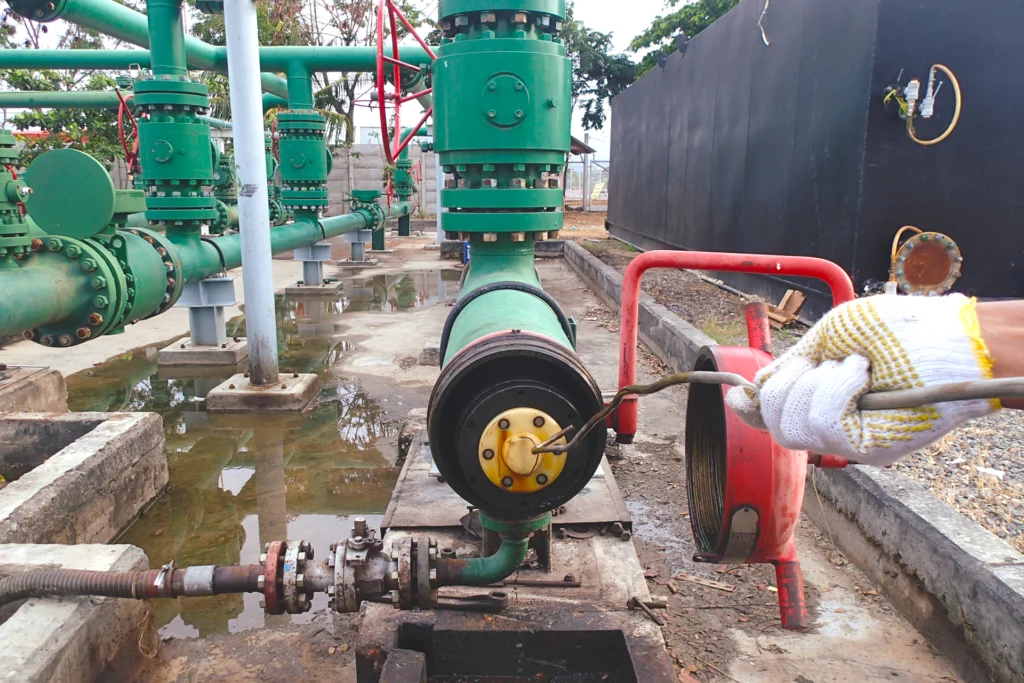
When the pig completes its run and reaches the pigging receiver, our monitoring equipment verifies its arrival. Our team then isolates, depressurizes and drains the trap to access the pig. After confirming that the conditions are safe, we retrieve the pig and any debris that accompanied it into the pigging receiver.
Step #5: Inspect
The last step in a B&W pigging run is a final inspection. Our team examines the pipeline using various visual and digital inspection methods to confirm that the pig’s objectives were successfully completed. By confirming the condition of your piping system, we can ensure it continues to operate safely or undergoes maintenance with minimal downtime.
Each pigging project B&W undertakes is handled with safety and precision at the top of mind. Through careful execution, our team delivers pigging services that lead to piping systems that are clean and ready for operation. Give us a call to see how our pigging process can maximize the performance of your piping systems.