AquaLazing
The Most Powerful and Efficient Way of Removing Contaminants
One of B&W’s most popular services, AquaLazing is the environmentally conscious, effective service used to clean piping and other plant components of mill scale, construction debris and process deposits using only water.
Key Benefits
- High pressure pump adaptable to any water supply
- Wireless remote pump kill switch with 500 ft. range
- Self-contained pump with noise rating of 78 dB
- Anti-withdrawal devices installed on inlet of process
- Clean installed pipe systems ranging in diameters from 2″ up to 120″
- Traverse multiple directional changes within a single piping system
- Clean up to 1000 ft. of pipe from a single entry point
- Climb vertically in pipe while maintaining the integrity of the cleaning
Quick Facts
Service Type: Ultra-high-pressure water jet cleaning
Primary Purpose: Internal pipeline and equipment cleaning
Typical Use Case: Pre-commissioning and maintenance
Core Method: High-pressure rotating water jets
Operating Pressure: Up to 15,000 PSI
Pipe Range: 2″–120″ diameter
Cleaning Distance: Up to 1,000 ft from single entry
Contaminants Removed: Mill scale, weld slag, debris
Environmental Impact: Water only, no chemicals
Noise Level: ~78 dB
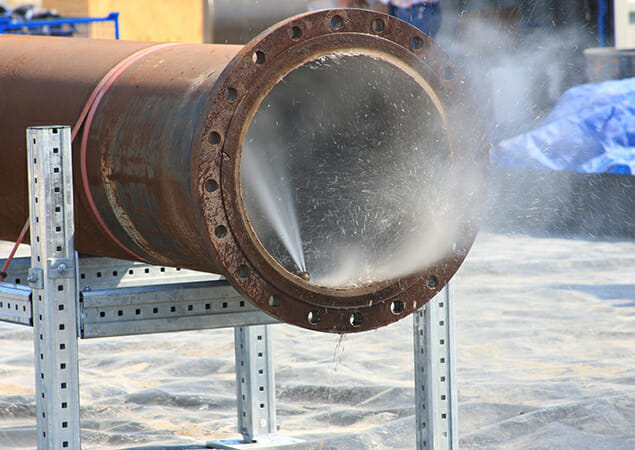
B&W’s AquaLazing service is an advanced, high-pressure water jetting process that can effectively clean piping systems of mill-scale, construction debris and process deposits. In addition to piping systems, AquaLazing can be used to clean other critical plant components which can become contaminated with water or process deposits.
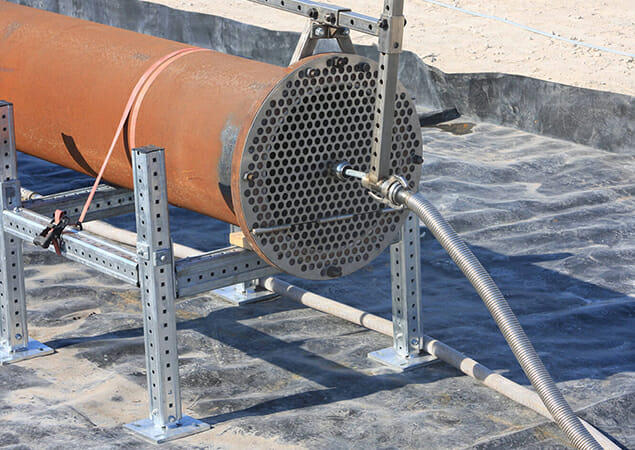
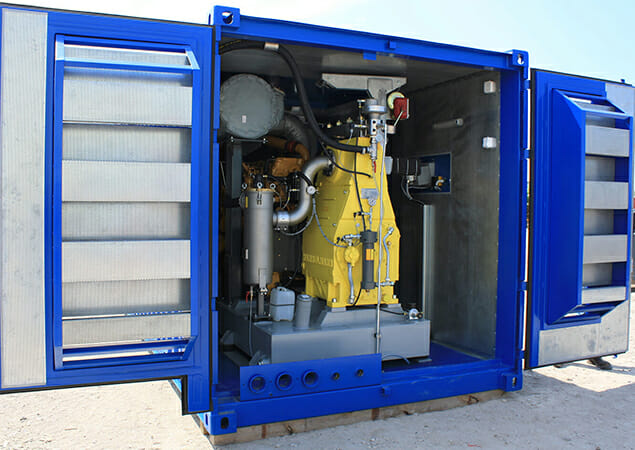
B&W Energy has developed the most advanced AquaLazing equipment available, based on sound engineering practices and years of experience managing and performing AquaLazing work. At the heart of the AquaLazing process is a robust high-pressure (15,000 psi) diesel-driven pump. Our AquaLazing services differ from standard hydrolazing technologies because our high-pressure pump unit is fully enclosed in a 78db-rated noise-suppressing container. This allows minimal disruption to surrounding work activities. High-pressure water is then transferred to a hose rotary device. The high-pressure rotating hose is fed through an advancing device, which controls the feed rate necessary to conduct the required cleaning. A specially designed high-pressure nozzle conducts the cleaning and moves debris out of the cleaned system.
On many projects, high-quality water availability and environmental regulations can present clients with a unique challenge for pre-commissioning cleaning. B&W helps mitigate these problems by offering additional services to supplement the AquaLazing process. Portable demineralized water units can be supplied to feed the AquaLazing pump with high-quality water if required on critical systems. Tanks and filtration equipment can be incorporated into the process to capture all effluent generated during the cleaning process. Deposits can be filtered out, and the captured water can be recycled back through the high-pressure pump.
AquaLazing can be used as a primary method for cleaning or in conjunction with other B&W Energy Service’s pre-commissioning cleaning services, such as Steam Blowing and Air Blowing, to help reduce overall cleaning times and associated costs. In many cases, AquaLazing can also be applied to piping systems typically requiring Chemical Cleaning to achieve the same cleanliness level, at reduced costs and with zero environmental impact. Drying of cleaned systems followed by the application of a corrosion inhibitor can be accomplished to facilitate cleaning systems ahead of schedule and ensure systems are ready for start-up.
Which cleaning method is right for my system: AquaLazing or chemical cleaning?
| Criteria | AquaLazing | Chemical Cleaning |
|---|---|---|
| Cleaning method | High-pressure water jetting (no chemicals) | Circulating chemical solutions |
| Best for | Mill scale, construction debris | Adhered scale, rust and oil residues |
| Environmental impact | Lower (no chemicals) | Moderate (chemical handling) |
| Risk profile | Lower due to no chemicals | Medium (requires containment) |
| Typical use | Piping & systems slated for cleaning that are normally done chemically | Complex internal contamination |
| Water usage | Moderate | Lower than some water-based processes |
| When to choose | Want a non-chemical option with comparable performance | Need to dissolve chemical-sensitive contaminants |
FAQs
What is AquaLazing in industrial pre-commissioning?
AquaLazing is a high-pressure water jetting process used to clean industrial piping and systems during pre-commissioning and remove mill scale, construction debris and contaminants before startup.
Unlike basic water flushing, AquaLazing uses engineered pressures, nozzle design and controlled cleaning paths to dislodge and transport debris through complex piping systems. At B&W Energy Services, AquaLazing is treated as an engineered process (not a generic cleaning method) designed to meet strict cleanliness requirements for power generation, refining, petrochemical and industrial facilities.
Since it uses only water, AquaLazing can often replace or significantly reduce the need for chemical cleaning while still achieving required cleanliness levels. This makes it especially valuable for projects seeking to reduce environmental impact, simplify waste handling and shorten commissioning schedules.
Can AquaLazing replace chemical cleaning?
In many cases, yes—AquaLazing can replace or significantly reduce the need for chemical cleaning.
AquaLazing is particularly effective at removing construction debris and mill scale, which are often the primary contaminants present before startup. By eliminating or reducing chemical cleaning, projects can lower costs, reduce environmental and disposal requirements, and simplify permitting and safety planning.
However, not all systems are identical. B&W evaluates each application to determine whether AquaLazing alone is sufficient or whether it should be combined with other cleaning methods. This engineered approach ensures cleanliness requirements are met without unnecessary chemical use.
How does AquaLazing help reduce commissioning schedules?
AquaLazing helps shorten commissioning schedules by reducing cleaning time, rework and downstream delays.
By effectively removing debris early, AquaLazing improves the efficiency of subsequent steps such as steam blowing or final flushing. Cleaner systems require fewer repetitions, less troubleshooting and fewer corrective actions during startup.
Additionally, eliminating or minimizing chemical cleaning reduces the time required for chemical circulation, neutralization, waste handling and regulatory approvals. The result is a more predictable pre-commissioning process and a smoother path to system turnover and startup.
How is cleanliness verified after AquaLazing?
Cleanliness verification is a critical part of the AquaLazing process and is addressed through inspection, documentation and engineering controls.
B&W uses a combination of visual inspections, debris capture analysis, system monitoring and documented cleaning paths to confirm that contaminants have been removed. The approach is tailored to project requirements and industry standards, ensuring results are defensible and repeatable.
This focus on verification gives owners and EPCs confidence that systems are ready for the next phase of commissioning, reducing the risk of contamination-related failures after startup.