Aerial Precision Assurance Program
Drone Construction Inspection for Refineries & Petrochemical Facilities
On every major capital construction project, a significant share of critical systems is only accessible by scaffold, rope access or crane. These are the systems that get inspected last—after the schedule’s been locked, rework windows have closed and the cost of fixing anything has multiplied exponentially.
Manual elevated walkdowns expose personnel to fall risk and create scaffold mobilization costs that can run into hundreds of thousands of dollars per phase. Defects found during the final pre-startup walkdown cost you precious time and money to fix.
By deploying GPS-precision drone construction inspections at every construction phase, B&W’s Aerial Precision Assurance Program (APAP) can identify startup-blocking deficiencies before they push your project past its projected timeline and budget.
Quick Facts
Program Type: Proprietary drone-based construction verification program
Certification: FAA Part 107-certified commercial drone operations
Flight Experience: 4,000+ hours
Applications: Refineries, petrochemical facilities, power plants, LNG terminals
Coverage: 7 construction phases, from groundbreaking through hydrocarbon introduction
What is the Aerial Precision Assurance Program (APAP)?
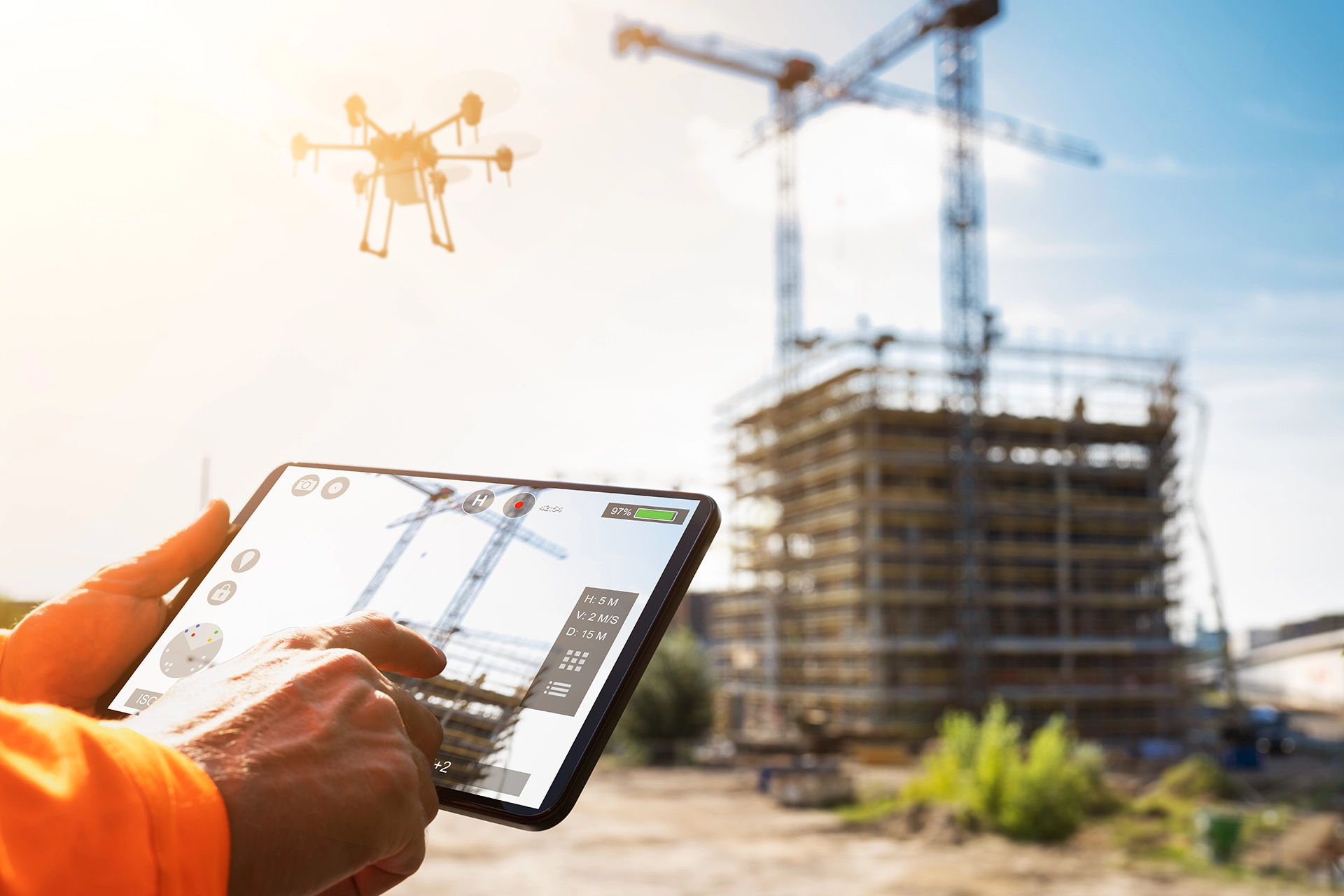
The Aerial Precision Assurance Program (APAP) is B&W Energy Services’ proprietary drone-based construction verification program that deploys at every phase of major refinery and petrochemical construction. It replaces scaffold-dependent elevated inspection with GPS-precision oil and gas drone inspection integrated directly into your mechanical completion and turnover process.
The B&W Aerial Precision Assurance Program Difference
While standard drone inspection service providers simply collect data, our program:
- Integrates findings into your mechanical completion and turnover, not filed as photographs
- Classifies every deficiency as startup-blocking, MC-blocking or advisory (A, B or C), so you know what to prioritize
- Provides real-time dashboard visibility so you can see every open elevated finding, its severity classification, the responsible contractor and its closure status the same day of deployment
- Reduces at-height personnel exposure, the risk of falls and scaffold mobilization costs by replacing a significant share of manual elevated walkdowns at every phase
- Utilizes FAA Part 107-certified pilots with backgrounds in military aviation, JTAC, ISR and helicopter operations
Refinery Drone Inspection Across All Seven Construction Phases
APAP deploys at seven distinct construction phases. For each phase, drone deployment produces specific deliverables tied to formal project milestones rather than general aerial surveillance.
Industrial-Grade Equipment for Industrial Environments
APAP operates a professional multi-sensor UAV industrial inspection platform with the following features:
- Thermal imaging camera with 28x optical zoom
- 112x hybrid zoom across 3 onboard day cameras
- Reads ¾” text at 150 ft and ½” text at 80 ft
- 1 cm horizontal and 1.5 cm vertical GPS positioning accuracy
- 49-minute flight time
- 15-kilometer operational range
- Laser range finder for up to 1 mile
- Onboard LiDAR for dimensional capture and deviation detection
- 1080p live video at 30 fps
- AI-enabled automated point-of-interest detection
B&W deploys APAP on a pilot basis on a project of your selection, with no required platform commitment. The program is structured in four phases, from kickoff through full digital handover:
Give our team a call to see how APAP could help reduce safety hazards, scaffold mobilization costs and change orders on your next project.
FAQs
What is drone construction inspection, and how does it work for refinery projects?
Drone construction inspection uses unmanned aerial platforms equipped with high-resolution cameras, thermal imaging and LiDAR sensors to conduct elevated visual inspections of construction systems without requiring scaffold or rope access.
B&W’s Aerial Precision Assurance Program goes beyond survey-grade drone construction inspection by integrating findings directly into the mechanical completion and turnover process. Every finding is severity-classified, assigned to the responsible contractor and tracked to closure through a live project dashboard. This provides project leadership with real-time visibility over elevated deficiencies from groundbreaking through startup.
How does UAV industrial inspection reduce scaffold costs on major construction projects?
Manual elevated inspection has two major cost drivers: scaffold mobilization and the personnel time required to physically walk down systems at height.
On a major refinery construction project, scaffold mobilization costs can run into hundreds of thousands of dollars per phase. B&W’s Aerial Precision Assurance Program replaces a significant portion of these manual elevated walkdowns with drone deployment, reducing the frequency and scope of scaffold erection required for inspection purposes. Beyond cost, reducing at-height personnel exposure decreases fall risk and the HSE exposure that comes with elevated manual inspection at an active construction site.
What should I look for in drone inspection service providers for oil and gas construction?
The most important distinction among drone inspection service providers for oil and gas construction isn’t equipment—it’s integration.
A drone vendor that delivers photographs and a PDF report puts the burden of cross-referencing findings against your punch list system on your team. A program that integrates directly into your mechanical completion and turnover process delivers findings in the same format and authority structure as ground-level punch items, classified by severity and assigned to the responsible contractor.
Beyond integration, look for FAA Part 107 certification, demonstrated experience in regulated industrial environments and a clear pilot engagement structure that lets you evaluate the program on a single project before any broader commitment.
Is oil and gas drone inspection proven technology, or is this experimental?
Drone-based inspection for petrochemical and refinery assets is an established practice among major operators. Several large-scale deployments have demonstrated the technology’s viability in active industrial environments.
What distinguishes B&W’s Aerial Precision Assurance Program from standard drone inspection service providers is the integration layer: aerial findings that carry formal project authority through direct integration with the mechanical completion and turnover system, versus findings that exist only as photographs or survey reports. B&W’s APAP team holds FAA Part 107 commercial drone certification and has backgrounds in military aviation, JTAC, ISR and helicopter operations.
How does APAP integrate with an existing mechanical completion system?
During the Phase 1 kickoff, B&W configures the APAP field tablet system to mirror the project’s system-based turnover structure. This means that findings are tagged not just by GPS location, but by the specific system turnover package they affect.
An A-category finding is immediately visible within the context of the turnover gate it impacts, rather than existing in a separate database that someone has to cross-reference manually. Integration with existing punch list management processes is part of the Phase 1 scope definition. APAP findings arrive in the same format and authority structure as ground-level punch items, not as a parallel system the project team has to manage separately.
How does drone asset inspection support long-term facility operations?
The GPS-tagged visual archive generated through construction doesn’t expire at mechanical completion. Every phase inspection, finding and pre-startup record creates a permanent as-built reference for the facility.
This drone asset inspection record supports three long-term capabilities: a digital twin baseline built from verified aerial reality rather than drawings, ongoing asset monitoring after startup and a foundation for 4D construction intelligence as AI tools for aerial data interpretation continue to mature. Full digital turnover documentation is delivered to the owner as part of the Phase 4 handover.