Hydrotesting
Maintain Safety Standards and Durability of Your Systems Over Time
Hydrotesting is the key step that stands between construction and pre-commissioning. Don’t rack up costly delays due to mediocre work or having to rely on multiple contractors for hydrotesting and cleaning services.
Since 2002, B&W has provided integrated hydrotesting and pre-commissioning cleaning services for projects all over the world. We’ve delivered for companies like Shell and Zachry, and we can do the same for your facility. Our team services:
- Piping systems
- Boilers
- Vessels
- HRSGs
- And more
Quick Facts
Service Type: Pressure integrity testing
Primary Purpose: Verify leak-tightness and structural strength
Typical Use Case: System validation before startup
Core Method: Pressurized water testing
Operating Medium: Water
Test Pressure: Up to design pressure or code requirement
Pipe Range: All industrial sizes
Systems Tested: Piping, vessels, boilers, HRSGs
Defects Detected: Leaks, weak joints, material flaws
Environmental Impact: Water-based, contained testing
When hydrotesting and pre-commissioning cleaning services are handled by different subcontractors, it can lead to removing control valves, flow elements and other components multiple times to ensure they don’t sustain damage from these services. That’s why B&W seamlessly combines hydrotesting and pre-commissioning cleaning services: to make sure these activities only have to happen once and reduce project costs. Whether you need to squeeze a boiler or test underground lines, our team has you covered.
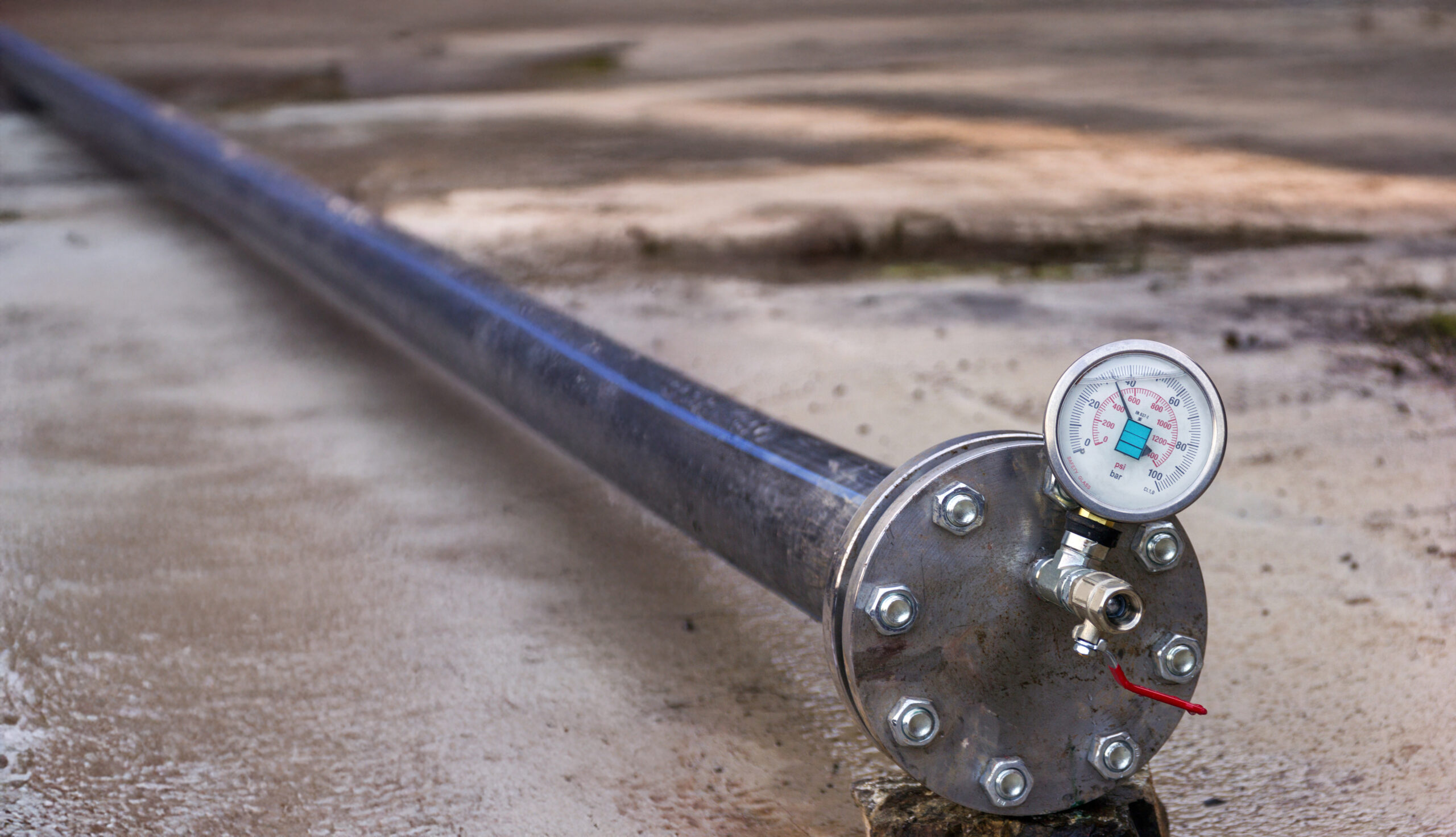
What is Hydrotesting?
Hydrotesting is a six-step process that tests the structural integrity of piping systems, boilers, gas systems, underground lines and other critical components to ensure they’re leak-free and ready for operation. For a more in-depth hydrotest definition, check out our blog.
Why is Hydrotesting Important?
A successful hydrotest on critical components is necessary in order for a facility to transition from construction to pre-commissioning.
Hydrotesting:
- Determines the strength of pressure parts at a greater pressure than the component’s average working pressure at ambient temperature
- Tests for leaks in pressure parts like tubes, headers, pipes and more
- Assesses the soundness of valves, welded joints and associated pressure parts
As a result, the hydrotesting process eliminates safety hazards and ensures compliance with code requirements. However, the work isn’t over when your facility’s systems pass a hydrotest. Removing the water from piping systems and other components following a hydrotest is just as important as the hydrotesting process itself.
Stagnant water within your facility’s systems not only has the potential to cause corrosion or freeze (depending on the weather), leading to costly maintenance and repairs, but it also poses significant safety hazards.
For example, if water remains in a fuel gas system following a hydrotest, it could cause blockages or gas leaks, which can lead to fires, explosions or the production of carbon monoxide from incomplete combustion. To protect your team and your facility’s systems, B&W integrates our hydrotesting services with air blowing services or pigging services to remove the water from your systems following any hydrotesting.
The B&W Hydrotesting Difference
- B&W gets the entire job done (and done right) by combining hydrotesting with pre-commissioning cleaning services
- Our engineers methodically plan your customized hydrotesting and pre-commissioning cleaning program on the front end to save you money and minimize change orders
- We’re committed to achieving zero safety incidents by:
28 Hours
Mandatory safety training for every new B&W employee
0.86 EMR
Average over 534,125 man-hours in the last three years
0.37 TRR
Average over 534,125 man-hours in the last three years
How B&W Performs Hydrotesting
B&W performs hydrotesting services on your facility’s systems through a comprehensive six-step process (including dewatering your systems following the hydrotest).
1. Isolate Section
2. Excavate Section
3. Pump Water
4. Increase Pressure
5. Maintain Pressure
6. Dewater System
When we engineer your custom hydrotesting package, we take your components’ varying maximum allowable working pressures, minimum and maximum test pressures, test volumes and other requirements into account.
B&W’s engineers develop comprehensive hydrotesting procedures to determine your systems’ pressure boundaries, temperature requirements, isolation notes, and, in some cases, required equipment removal. If your facility’s hydrotesting package requires a city inspector, our team will work alongside them to ensure compliance.
Our team ensures that your lines and vessels are tested to the accepted ANSI code, depending on the type of facility they’re installed in, and diligently follow B31.3 hydrotest pressure for chemical plants and refineries, while following B31.1 hydrotest pressure for power plants. When performing hydrotesting services on boilers and HRSGs, we make sure that your hydrotesting package conforms to boiler codes applicable in the state where your system is located.
Give us a call to learn how B&W’s integrated hydrotesting and pre-commissioning cleaning service packages can set your facility up for success for the rest of pre-commissioning and every stage after.
Should I perform hydrotesting or pre‑commissioning cleaning first?
Hydrotesting vs Pre-Commissioning Cleaning
| Criteria | Hydrotesting | Pre-Commissioning Cleaning |
|---|---|---|
| Main goal | Validate pressure integrity | Prepare for operation by cleaning |
| Purpose | Safety/containment test | Clean contaminants from system |
| Required before | Commissioning | Commissioning & operation |
| When to choose | Test for leaks/strength | Remove debris/contaminants |
FAQs
What types of systems can be hydrotested?
Hydrotesting is used on piping, vessels, boilers, HRSGs, heat exchangers and other pressure-containing systems.
B&W designs each hydrotest to match system size, geometry and operating pressure. This includes high-pressure process lines, utility piping and industrial installations in power generation, petrochemical and refining facilities, ensuring full compliance with safety and engineering standards.
How is hydrotesting performed safely?
Safety in hydrotesting depends on engineered procedures, proper isolation and qualified personnel.
B&W employs coded vessels, controlled fill rates, pressure monitoring and inspection procedures. Risk assessments, ASME B31.3 / B31.1 compliance and trained crews ensure hydrotesting is executed without damage to systems or exposure to hazards, even in complex industrial environments.
What are the benefits of integrating hydrotesting with cleaning services?
Combining hydrotesting with pre-commissioning cleaning services improves efficiency and reduces overall project cost.
By cleaning debris and flushing systems before or during hydrotesting, B&W minimizes repeated handling, reduces rework and ensures debris does not interfere with pressure testing. This integration delivers measurable time, safety and quality benefits for large industrial projects.
Can hydrotesting detect leaks in complex piping systems?
Yes, hydrotesting is effective for detecting leaks in long, complex or high-pressure piping systems.
By pressurizing the system with water to the specified test pressure, B&W can identify weak points, seal failures or fabrication defects that may be missed during low-pressure testing. Engineered monitoring and inspection ensure accurate detection without system damage.