High-Velocity Oil Flushing
Professionally Engineered High-Velocity Oil Flushing Services
Lubricant contamination is the number one cause of lubricant-related equipment failure. The condition of your oil can make or break the operation of your turbines and other plant machinery. High-velocity oil flushing is essential to maintaining the health of your facility’s equipment.
Thanks to decades of experience executing high-velocity oil flushing services, our team can shorten traditional oil flushing timelines from months to weeks (or even days). B&W Energy Services has experience performing high-velocity oil flushing for companies including Shell, Chevron Phillips, Methanex, the Kuwait National Petroleum Company (KNPC), Samsung Engineering, CH2M Hill, Celanese, Zachry and more.
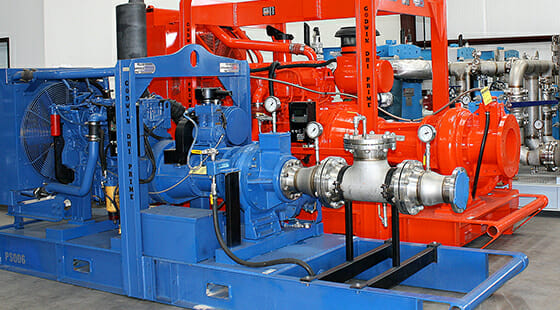
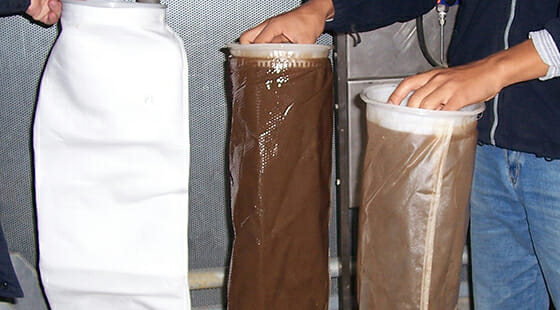
Table of Contents
- What is High-Velocity Oil Flushing?
- Why is Oil Flushing Important?
- The B&W High-Velocity Oil Flushing Difference
- How B&W Performs High-Velocity Oil Flushing
Get a Complimentary Oil Analysis
We also offer complimentary oil analyses to help you make more data-driven decisions. If you’re interested in a complimentary oil analysis, please contact our team, and a B&W representative will get back to you shortly.
Start Flushing Today
Quick Facts
Service Type: Hydraulic system cleaning
Primary Purpose: Remove particulate contamination from oil systems
Typical Use Case: Turbines, compressors, rotating equipment
Core Method: High-velocity oil circulation
Operating Medium: System oil or flushing oil
Typical Velocity: 2–3× normal operating flow
Cleanliness Standard: ISO 4406 or NAS class targets
Systems Treated: Lube oil, hydraulic, seal oil systems
Contaminants Removed: Particulates, metal fines, debris
Environmental Impact: Closed-loop oil recovery
What is High-Velocity Oil Flushing?
High-velocity oil flushing cleans various contaminants from the oil and oil lines used within your facility’s equipment and turbines through a tried-and-true five-step method.
Why is Oil Flushing Important?
Lubricating oils are the lifeblood of your plant’s equipment. When particles and debris contaminate your lubrication systems, it can lead to expensive repairs and downtime later on.
Your lubrication systems may be contaminated during manufacturing, transport and installation at the project site. Atmospheric conditions like heat, dust, moisture and chemical vapors can also negatively affect lubrication systems.
Ensuring these systems are cleaned effectively through high-velocity hot oil flushing extends the life of your critical equipment and ensures long-term project success.
The B&W High-Velocity Oil Flushing Difference
- B&W’s specially designed equipment can perform a high-velocity oil flush in 5-7 days as opposed to the average 1-2 month process
- Smaller high-velocity oil flushing providers risk introducing contaminants to a project if they don’t properly evaluate each system or maintain clean equipment
- Our team ensures that your oil meets the appropriate particle count and fulfills OEM cleanliness specifications
- Learn what else sets us apart
How B&W Performs High-Velocity Oil Flushing
B&W Energy Services conducts high-velocity oil flushing lubrication services through the following five steps:
1. Evaluate
2. Plan
3. Model
4. Mobilize
5. Execute
We design our high-velocity flushing skids in-house, complete with integrated pumping, filtration and heating components to create a minimum footprint. This allows for rapid mobilization and reduced rig-up time once on-site.
Our team also offers multiple skid options to tackle lube oil systems of different sizes, each equipped with variable frequency drives. Our equipment adapts to a wide range of flow rates to ensure that we complete a system clean in significantly less time than with onboard equipment. We can also provide hard-to-find specialty flushing kits, custom fittings and bearing jumpers.
At B&W, we understand the importance of preventing cross-contamination and potential leaks during the high-velocity hot oil flushing process. That’s why we meticulously inspect, clean and wrap each component before shipping it to the site.
Contact us to learn more about how your facility can benefit from B&W’s high-velocity oil flushing lubrication services.
Which cleaning method is right for my system: high-velocity oil flushing or air blowing?
| Criteria | High-Velocity Oil Flushing | Air Blowing |
|---|---|---|
| Purpose | High-pressure water jetting (no chemicals) | Circulating chemical solutions |
| Specialty | Mill scale, construction debris | Adhered scale, rust and oil residues |
| System type | Lubricant circuits, turbines | General piping systems |
| Contamination focus | Oil-based deposits | Water & solids |
| When to choose | Removing oil-borne contaminants | Removing non-oil contaminants |
FAQs
Can oil flushing damage turbine bearings or seals?
When performed correctly with proper engineering and equipment, oil flushing will not damage turbine bearings or seals. The key is maintaining appropriate flow rates, velocities and temperatures that effectively clean while staying within safe operating parameters for your specific equipment.
B&W Energy Services performs incompressible fluid modeling during the planning phase to confirm that design flow rates and velocities will be achieved without exceeding equipment limitations. We calculate Reynolds numbers to ensure a turbulent flow necessary for effective cleaning while respecting manufacturer guidelines.
Our variable-frequency drive-equipped skids allow precise flow control rather than forcing oil through systems at excessive rates. Temperature cycling is carefully controlled to optimize viscosity for debris removal without damaging seals or gaskets.
The risks come from inexperienced providers who use improperly sized equipment, inadequate engineering or poorly maintained flushing systems. This is why choosing a contractor with proven oil flushing expertise and purpose-built equipment is essential to protecting your valuable turbine assets.
What is the difference between oil flushing and oil filtration?
Oil flushing is a dynamic pre-commissioning or maintenance cleaning process that circulates oil at high velocities through entire lubrication systems to dislodge and remove contaminants, while oil filtration is the continuous process of removing particles from oil during normal equipment operation.
Oil flushing uses external high-volume pumps and filtration equipment to achieve velocities and flow rates far exceeding normal operating conditions, specifically designed to break loose trapped debris from bearing lines, dead legs and piping. The process continues with repeated cycles and thermal variations until OEM cleanliness specifications are met.
Oil filtration happens during regular operation through onboard filters that maintain oil cleanliness but cannot remove construction debris or achieve the aggressive cleaning needed before initial startup.
Think of oil flushing as the deep cleaning required before moving into a new house, while filtration is the ongoing housekeeping. B&W Energy Services’ high-velocity flushing process uses specialized external equipment that generates flow rates dramatically higher than those of operational filtration systems, completing in days what operational filters could never accomplish.
How do you know when oil flushing is complete?
Oil flushing is complete when oil samples consistently meet or exceed OEM particle count specifications and cleanliness standards for your specific equipment.
B&W Energy Services performs systematic oil sampling throughout the flushing process, analyzing particle counts with automated counters that measure contamination levels in accordance with ISO cleanliness codes.
Samples are typically taken from multiple locations in the system to ensure uniform cleanliness. The flushing process continues with thermal cycling and high-velocity circulation until consecutive samples demonstrate stable, acceptable particle counts that satisfy manufacturer requirements. Different equipment types have different cleanliness standards—gas turbines typically require extremely low particle counts, while some hydraulic systems may have less stringent requirements.
We provide documented test results showing particle count progression and final cleanliness achievement. OEM specifications often require specific ISO cleanliness codes, such as 15/13/10 or better. Our engineering team knows the exact requirements for all major turbine manufacturers and ensures your system meets those standards before declaring the flush complete.
What is thermal cycling in oil flushing?
Thermal cycling in oil flushing is the process of systematically varying oil temperature during flushing operations to optimize contaminant removal. As oil temperature increases, viscosity decreases, allowing the oil to flow more easily into tight spaces and dead legs where debris hides. The thinner, heated oil suspends particles more effectively and carries them back through filtration systems at accelerated rates.
B&W Energy Services’ flushing skids include integrated heating components and heat exchangers specifically designed to cycle lube oil temperatures during flushing. The increased flow velocities through our high-volume pump systems naturally generate friction heat, which we harness and control to maintain optimal oil temperatures.
By alternating between different temperature ranges, we create expansion and contraction cycles that help break loose stubborn particles adhering to piping walls and bearing surfaces. This thermal cycling approach, combined with high-velocity circulation and vibration tools, is a key reason B&W can complete oil flushing in 5-7 days, rather than the 1-2 month timeline required by traditional methods.